


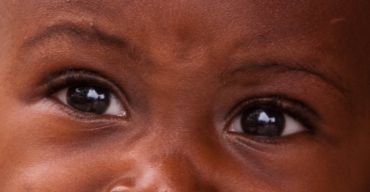
Why our migrations?
Given the way migration is treated and narrowly viewed by the media and by political, social, and even economic interests, whereby a certain "undefined" group agrees to "help" those referred to as "migrants" (a term that is widely used, but ill-defined), is it still possible to ask "why", to ask what meaning our migrations have, all our migrations?
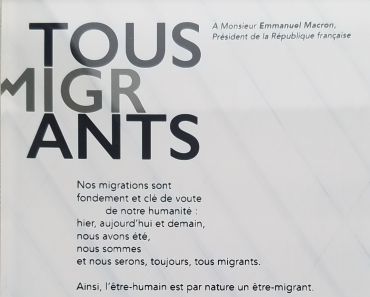
Migrant: Global Compact for Migration!
So, what’s happening with the Global Compact for Migration? What’s new in regard to my "migrant" condition? Am I still seen or considered as the "other", or do you and I finally perceive ourselves as "migrants"?
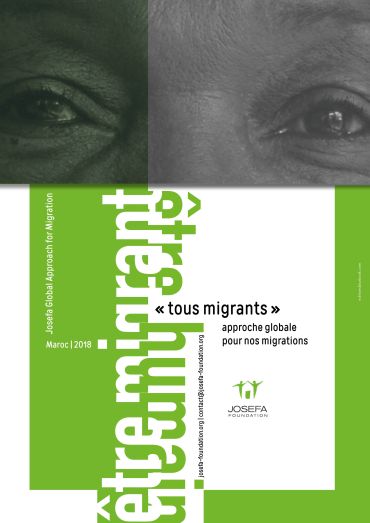
Global Josefa versus Global Compact for Migration (GCM)
At a time when countries are going from one migration to another with respect to "asylum" and "migration", at a time when the Global Compact is being developed, Josefa is joining in with other nations at the table.
Josefa declares: "We are all migrants" and "We believe in a global approach". How does this differ from the group of nations that support the Global Compact?
Well, Josefa considers that we are all, in our uniqueness, migrants. Not "migrants" in a negative sense but migrating beings. I am, you are, he is, she is, we are, you are, they are "migrants" in a positive sense, without reduction or projection. Global Josefa, unlike the GCM, understands that each person, each migrant is a unique and complex individual, and takes into consideration the social, economic, cultural and spiritual aspects of each individual. In other words, according to all human dimensions, named or unnamed.
So, the "GCM", what do you think about the Josefa Global Approach for Migration(s)? Feel free to let us know, without delay.
Gilbert
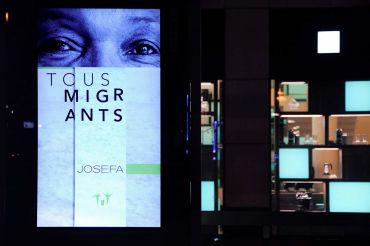
Migrants, all of us
As we return to our autumn schedules, Josefa invites us once again to think carefully about our relationship with our migrant humanity, our relationship with our fundamentally migrant nature. It is not about stating an abstract truth, nor about creating a new supercategory called "migrant", but, more simply, more radically, about being open to the possibility of a closer look on "my migration".
By drawing closer to my migration, recognising it as mine, as unique, whether it be free or forced, temporal or spiritual, physical or psychological, in space or in time, I too become part of it: "we are all migrants".
Why should we exclude, discriminate, or categorise a segment of our humanity, those who may be more "migrant" than me?
Why should we claim mobility rights and freedom of movement for ourselves, or even, generously, for others (if at least these "others" have expressed the desire and delegated the request for it), when it concerns that part of our humanity that allows it to move and to evolve? How limiting would my own identity be if it could only be defined or determined for me by others: parents, friends, society, social welfare bodies, defenders of "minorities", politicians, media, enemies, etc.?
Migration is the foundation of our human condition. It concerns all of us, as migrants; it is our destiny. If I am not moving or have stopped moving, if I deny or am denied my "migrant being", by being prevented from migrating, then I am dead to myself and to others, today and tomorrow.
We should, of course, be careful not to mix up everything: not all of us are migrants who have been exiled, forced to flee the land of our birth, of our residence, our land by choice or by preference.
But all of us are potentially, capably, invited to look at ourselves, to discover that we are migrants, which is an essential element of our human condition, our human expression, our human construction.
Challenges or realities: migrants, all of us.
Gilbert
I am… my migration
This September, as academic activities resume, Josefa formulates an invitation, a question which many students will also ponder during their school year: "Who am I?"
When you agree to this introspection game, you also agree to look at others in order to try to discover yourself.
On this path that is challenging for oneself and for others, perhaps I could heed the path travelled by the one who might eventually help me answer my question: the exile, the displaced person who left a little of himself, of "his home", somewhere else.
If there is trust, then the exile, the asylum seeker, the refugee, this companion of mankind could be a person whose word, silence, gestures, and look, in short, whose presence allows me to delve, to move, in and around, this all-important question: "Who am I?".
Indeed, is it not mainly during times of separation, mourning or exile that my identity begins to waver and that suspicion and doubt set in about my own identity? Who am I "still"?
And thus, listening to those who, in the course of their migration, have had to hide, bury, transform, or adjust their identity, to continue on their path towards asylum, towards a future other than the one that was envisaged, programmed, or built, possibly by a few academic years.
Certainly, the revelation of this closeness, of this listening to the other, in his or her exile, with more or less joy, might make me think that "I am movement", that I am… migration.
But the challenge lies elsewhere: it is not about looking for the meaning of life, but for the meaning of "my life". And, in a way, the goal is not so much to get an answer, but to let myself cross and walk through paths which together will continue to construct or deconstruct, in me and around me, with me, sometimes without me or against me, perhaps even endangering my life.
I therefore become what I am; my identity is not linked to a particular label, instead I am alive and on the move, dependent on the encounters, paths, thresholds or borders which I happen, freely or under duress, to cross.
Together with some, with all, I am… my migration.
Gilbert

June 20: World "Refugee" Day
Identities in search of refuge: who are we? People who, sometimes, often, or too often, willingly or under duress, and for various reasons, leave their country, creating or causing changes in their identity: traveller, exiled, displaced, asylum seeker, stateless, refugee...
There is now an umbrella term for people who are on the move, having left their "home" and crossed various political, social, economic, cultural, ethnic, religious… borders: the "migrant". In this context, the "migrant" is characterized by a transnational and multicultural identity, and it is the term circulating in news reports.
But this identity, as defined above, is also a bridge between those who have left their country and those who have not (yet) moved by way of a spatial migration.
Because of the new proximity, or even the hospitality, experienced or planned, with people coming from elsewhere, the "sedentary" person is compelled to discover that they too are, somewhere, in their history or deep within themselves, migrants. Perhaps their plight calls us to ignore borders, which seek to demarcate and protect a territory, to break down walls, however high, which shelter us, and barriers and fences which separate us from others. Willingly or unwillingly, human life is played out in an open space, in exchanges and relationships.
Going beyond the reciprocal exchanges, we come together as migrants, all of us, to build and enrich a renewed culture at a crossroads, according to each of our individual freedoms, between assimilation, which tends to limit the newcomer, forcing him to adopt fully the host culture, leaving aside his own, and a communalistic grouping that wants to firmly keep its "own" culture, rejecting any external input. In order to promote a path of co-insertion and the journeying together, everyone is asked to contribute, on behalf of their migrant, unique, special or indeed universal humanity.
On June 20, 2016, World Refugee Day, let’s remember, among other things, our collective human history as free or forced migrants. "Man is a refugee to man." Together, as migrants, let’s accept our migrations.
Gilbert